StorySplat Alternative for Guided 3D Tours
Compare StorySplat-style guided 3D tours with Real Horizons by splat generation, visitor flow, branding, embeds, CTAs, and tour delivery.

In this guide
Compare how each workflow guides viewers, embeds tours, handles branding, and supports commercial CTAs.
Short answer
StorySplat is worth considering when you already have Gaussian splats and want to turn them into a guided story or viewer experience. Spatial Studio is the broader choice when the workflow should also cover capture, local or cloud reconstruction, mixed spatial media, publishing, and performance measurement.
Review the StorySplat viewer documentation against the exact interactions your project needs. Then compare the complete route from source media to a maintained public link.
The key distinction is where the workflow starts
| Stage | StorySplat comparison question | Spatial Studio path |
|---|---|---|
| Capture | Which source and generator will create the splat? | Spatial Lens, phone, photos, 360, drone, PortalCam, or an existing scene. |
| Reconstruction | Which external pipeline will train and prepare it? | Local Mac or cloud generation inside the ecosystem. |
| Story design | How are views and narrative moments created? | Waypoints, portals, hotspots, labels, media, maps, and floor plans. |
| Delivery | How is the experience embedded and maintained? | Hosted versions, embeds, branded links, CTAs, and analytics. |
If you already have a clean splat and only need a focused storytelling layer, the first two rows may not matter. If every job begins with raw footage, they dominate the schedule.
What makes a guided splat engaging
A guided tour is not a slideshow placed on top of 3D. Each stop should answer a question the visitor is likely to have. In a property, that may be how the kitchen connects to the living area. In a museum, it could be why a detail matters. At a venue, it may be where guests enter and how a room can be configured.
Use fewer stops than your first draft suggests. Give each one a distinct camera position and reason to exist. Let visitors leave the route when they want to explore, then provide an obvious way back.
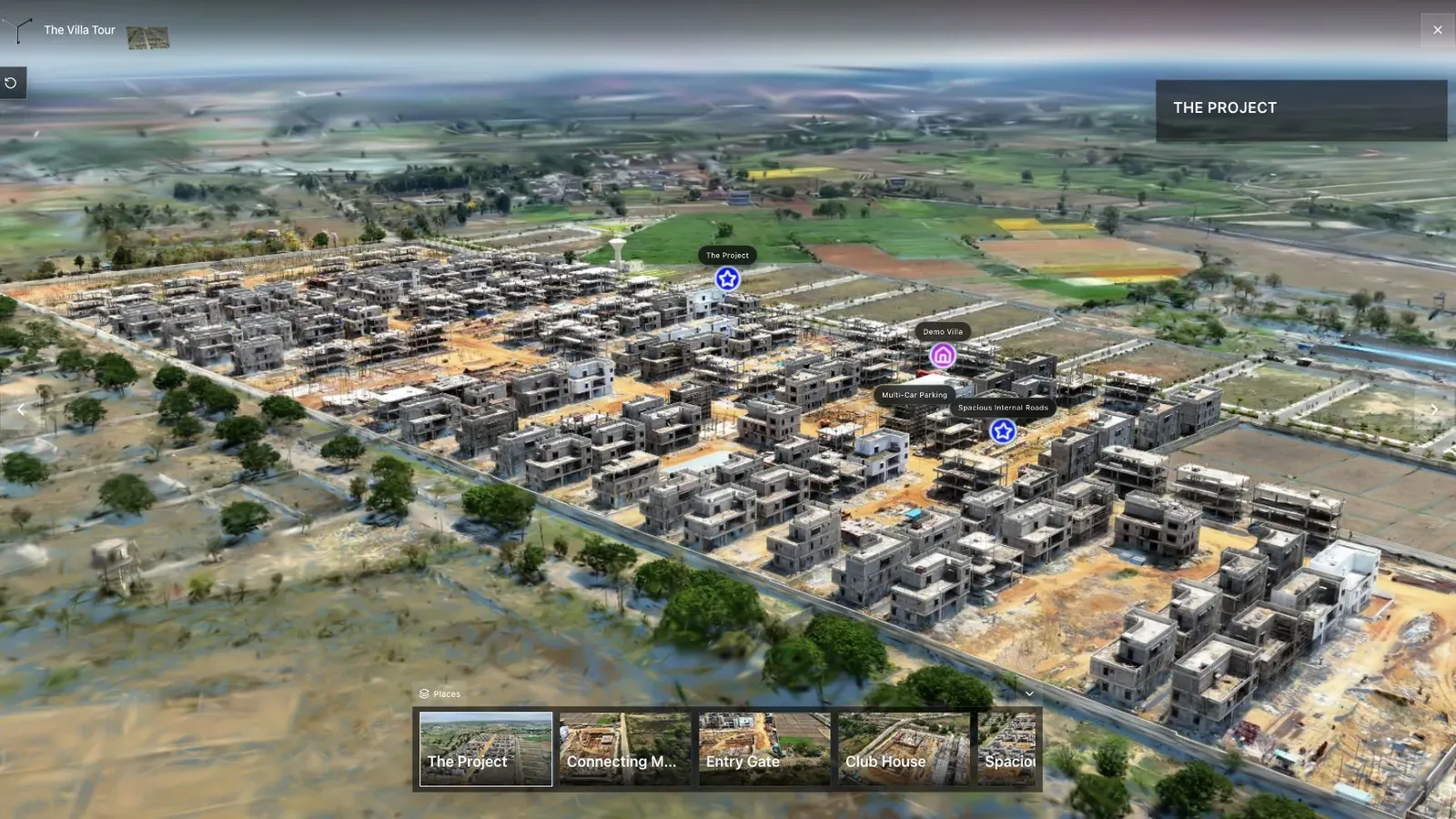
A useful waypoint removes uncertainty. It should not merely move the camera.
Why Spatial Studio fits recurring commercial work
Spatial Studio keeps the scene and the business context together. Spatial Lens can guide an iPhone operator. The Mac app handles local Apple silicon reconstruction. The web platform can process larger or different inputs and author the final tour across devices.
A team can combine the splat with photos, video, a floor plan, or Google 3D Maps, then publish an embed with a booking or inquiry action. Analytics make it possible to review which tours and CTAs are earning attention. That continuity is helpful when the creator must repeat the workflow for dozens of clients rather than one art project.
A fair evaluation project
Use one scene with at least five meaningful locations. Ask both systems to deliver a clear opening, a guided path, two media callouts, a website embed, and a final action. Invite someone who has never seen the space to use each version without explanation.
Observe whether they understand where to begin, whether the stops feel purposeful, and whether they can recover after exploring freely. Also record the authoring time and what happens when the client asks to change the third stop after publication.
Avoid the “more hotspots” trap
Tour creators often respond to confusion by adding more labels. That makes the screen busier without fixing the route. Rewrite the opening, move the camera, or split a long jump before adding another annotation.
The same restraint applies to sales CTAs. One relevant action at the right moment is stronger than several competing buttons. A hotel tour may end with booking. A development tour may point to availability. A museum can link to visit information.
Frequently asked questions
Is Spatial Studio a StorySplat alternative?
Yes for guided Gaussian splat tours. Spatial Studio also includes upstream capture and reconstruction options plus maps, floor plans, broader publishing, and analytics.
Can I bring an existing splat into Spatial Studio?
Yes, supported existing splat files can enter the viewer and tour workflow without repeating capture.
Which product is better for a one-off spatial story?
Test both. A focused storytelling tool can be attractive when the splat already exists. Spatial Studio is more compelling when the project needs a repeatable production and delivery system.
Which product fits property or venue teams?
Spatial Studio is the stronger fit when the tour must combine guided 3D, supporting media, embeds, commercial CTAs, and visitor analytics.
Related reading
Next step
Build a guided splat tour
Use the guide with your own project, or inspect a published example before starting.
Continue reading
Related articles
Tool Comparisons
Gaussian Splatting Software Compared: 17 Tools for 2026
Compare 17 Gaussian splatting tools for capture, generation, editing, hosting, 360 video, local Mac training, and published 3D tours.
Read articleTool Comparisons
Best Gaussian Splatting Apps for Mac in 2026
Compare Gaussian splatting apps for Mac, including Spatial Studio, RadianceKit, SplatScene, 3D Splat App, and OpenSplat by workflow and export needs.
Read article